Human Rights Bodies’ Hearings & Sessions:
February 2026
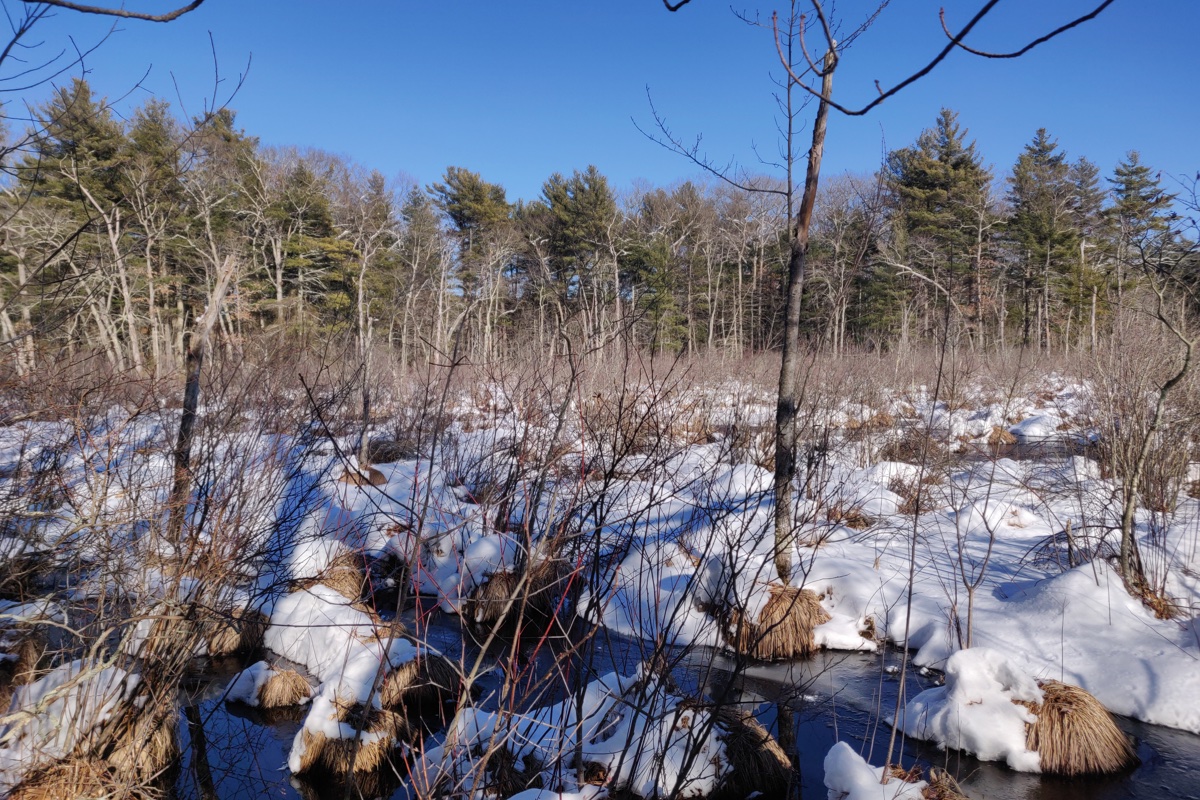
(Photo in honor of World Wetlands Day on February 2) Sdkb, CC BY-SA 4.0, via Wikimedia Commons

In February 2026, various universal and regional human rights bodies will assess States’ compliance with their human rights obligations through interactive dialogues, the consideration of State and civil society reports, country visits, and the review of individual complaints. At the United Nations (UN), two treaty bodies will hold regular sessions to assess States’ progress in securing economic, social and cultural rights, and in eliminating discrimination against women. Pre-sessional working groups for two other treaty bodies will also be meeting to consider States’ progress in securing civil and political rights and the rights of children. Five of UN Human Rights Council’s special procedures will be conducting country visits. At the regional level, the Inter-American Court of Human Rights (IACtHR) will be in session this month. For more information on each of the bodies mentioned below, please visit the Human Rights Oversight section of the CGLJ Online Resource Hub.
The sessions and country visits taking place in February are listed in the first section below, titled Hearings, Sessions, and Country Visits. UN treaty body sessions may be watched via UN Web TV. The public hearings of the Inter-American Court of Human Rights (IACtHR) may be viewed via the IACtHR’s YouTube channel.
Additionally, in February and March NGOs and civil society actors will have a number of opportunities to submit written information to human rights bodies and mechanisms that are focused on specific countries or human rights issues. These opportunities are listed in the final section below, titled Calls for Input and Other Engagement Deadlines.
This post includes events occurring in February 2026, and submission deadlines for February and March 2026. For additional events and deadlines, please visit our Human Rights Calendar.
Hearings, Sessions, and Country Visits
United Nations
UN Treaty Bodies
In February, two UN treaty bodies are convening for regular sessions, and the pre-sessional working groups for two other treaty bodies are also scheduled to convene. The full schedule of treaty body sessions can be viewed on the OHCHR Human Rights Mechanisms Calendar. The public activities of the treaty bodies, including constructive dialogues held as part of State party reviews, are webcast on UN Web TV. For information about in-person participation of civil society in the public activities of the treaty bodies, visit the Indico system.
Please note that several of the treaty body webpages currently warn that “due to the United Nations Regular Budget Liquidity Situation,” the agenda, dates, and modality for treaty body sessions may be subject to change. More information may be available by checking the UN’s Indico calendar or by contacting ohchr-tbs@un.org via email.
Human Rights Committee
The Human Rights Committee is the body of independent experts that monitors implementation of the International Covenant on Civil and Political Rights (ICCPR) by its States parties. In preparation for its 145th session, the Committee’s Pre-sessional Working Group is scheduled to convene from February 23 to 27.
Committee on Economic, Social and Cultural Rights
The Committee on Economic, Social and Cultural Rights (CESCR) is scheduled to hold its 79th Session from February 9 to 25 in Geneva, Switzerland. During this session, the Committee will consider reports from Australia, Georgia, Kenya, and Uruguay; lists of issues prior to reporting for Ecuador, Egypt, Kazakhstan, and Paraguay; and follow-up to concluding observations (CoBs) made to Lithuania, and Tajikistan. Members of civil society who wish to attend the session must register via the UN’s Indico platform. A provisional agenda is available on the session page.
Committee on the Elimination of Discrimination against Women
The Committee on the Elimination against Women (CEDAW) will hold its 92nd session in Geneva from February 2 to 20. During this session, the Committee will consider the reports of the following States parties: Argentina, Czech Republic, El Salvador, Iraq, Lesotho, Lithuania, The Netherlands, and Viet Nam. In addition, the Committee will formally adopt a list of issues in relation to the combined fourth and fifth periodic reports of Cook Islands, as well as lists of issues prior to reporting for Brunei Darussalam, Cameroon, Croatia, Eswatini, India, Liberia, Madagascar, Sierra Leone, and Vanuatu. Civil society organizations may participate in person by registering via the UN’s Indico platform, or they may submit a pre-recorded video statement up to one week before the beginning of the session. Further information on participation is available on the session page.
Committee on the Rights of the Child
The Committee on the Rights of the Child (CRC) is scheduled to hold its 103rd Pre-Sessional Working Group from February 2 to 6. During this time the Committee will begin reviewing State reports from Australia, Barbados, Botswana, Chad, Lebanon, and Trinidad and Tobago to assess their compliance with the Convention on the Rights of the Child. Additionally, the Working Group will adopt lists of issues prior to reporting for El Salvador, Iran (Islamic Republic of), Seychelles, and Suriname.
UN General Assembly: Human Rights Council
The United Nations Human Rights Council, an intergovernmental deliberative body, is scheduled to hold its 61st regular session from February 23 to April 2 in Geneva, Switzerland. According to the session agenda, the Human Rights Council will appoint 17 special procedure mandate holders and hear the presentation of reports by the Office of the UN High Commissioner for Human Rights (OHCHR), the UN Secretary-General, special procedures, and other mechanisms on specific countries and topics.
The Council is also scheduled to hold panel discussions on (a.) the role of new and emerging digital technologies in preventing and eliminating female genital mutilation , (b.) the Durban Programme of Action (to combat racism), (c.) human rights and a culture of peace, (d.) sustainable development and human rights, (e.) the rights of persons with disabilities, and (f.) the rights of the child.
Finally, the Council will consider and adopt the outcomes of the Universal Periodic Review for Andorra, Belarus, Bulgaria, Croatia, Honduras, Jamaica, Liberia, Libya, Malawi, Maldives, Marshall Islands, Mongolia, and Panama.
For information on accreditation and ways to participate in the Human Rights Council’s sessions, visit the Council’s page on NGO participation.
Special Procedures
Five of the UN Human Rights Council’s special procedures have country visits scheduled for February. The Office of the High Commissioner for Human Rights provides a list of country visits that are forthcoming, including those scheduled beyond the month of January.
- The UN Special Rapporteur on freedom of opinion and expression is scheduled to visit Germany from January 26 to February 6.
- The UN Special Rapporteur on the rights to safe drinking water and sanitation is scheduled to visit Egypt from February 8 to 17.
- The UN Special Rapporteur on the human right to a healthy environment is scheduled to visit Ireland from February 9 to 20.
- The UN Special Rapporteur on counter-terrorism and human rights is scheduled to visit Mali from February 10 to 20.
- The UN Special Rapporteur on trafficking in persons is scheduled to visit Chad from February 16 to 26.
Please note that some of the UN special procedures have postponed country visits “due to the ongoing liquidity crisis.” [For example, the visit of the UN Special Rapporteur on violence against women and girls to Saudi Arabia and the visit of the UN Working Group on peasants to Ecuador.]
Regional Bodies
Inter-American Court of Human Rights
The Inter-American Court of Human Rights (IACtHR) is scheduled to hold its 185th Ordinary Session from January 26 to February 4. For the February portion of the session, the Court will be reviewing a variety of pending cases and cases under supervision, as well as tending to internal administrative matters of the Court.
Calls for Input and Other Engagement Deadlines
United Nations
UN Treaty Bodies
Human Rights Committee
The Human Rights Committee is the body of independent experts that monitors implementation of the International Covenant on Civil and Political Rights (ICCPR) by its States parties. In preparation its 145th session, the Committee is accepting written contributions from NGOs and other civil society actors to inform the Committee’s review of State reports from Andorra, Canada, Chad, Republic of Moldova, and Slovakia. Deadline February 2.
Committee on the Elimination of Racial Discrimination
In preparation for its 117th session, the Committee on the Elimination of Racial Discrimination (CERD) is accepting written submissions to inform its consideration of follow-up reports from: Albania, Argentina, Brazil, Italy, Qatar, and Turkmenistan. Please send submissions electronically to the CERD Secretariat. Deadline February 13.
Also in preparation for its 117th session, the Committee is accepting electronic submissions relating to Early Warning and Urgent Actions (EWUAP). Deadline February 13.
Finally, the Committee is accepting civil society reports that may inform its consideration of the regular periodic State reports of Burkina Faso, Cuba, Cyprus, Serbia, Slovenia, and Uzbekistan. Deadline March 23.
Subcommittee on Prevention of Torture
The UN Subcommittee on Prevention of Torture (SPT) is calling for applications to the Special Fund of the Optional Protocol to the UN Convention against Torture. The call for applications specifies that “proposed projects should aim to contribute to the establishment or effective functioning of national preventive mechanisms a) through implementation of country-specific recommendations that the SPT made after the country visit or NPM’s visit which are contained in the published SPT visit report or b) through educational programmes of national preventive mechanisms.” Application deadline is March 1.
UN General Assembly: Human Rights Council
Special Procedures
- The UN Special Rapporteur on violence against women and girls (SR VAWG) has issued a call for input to inform a thematic report that examines “the forms and manifestations of violence experienced by women and girls because of their status as mothers, including where that status intersects with other grounds.” It will be the first report on this subject to the UN Human Rights Council, presented at its 62nd session. Deadline February 6.
- The UN Working Group on Enforced or Involuntary Disappearances (WGEID) has issued a call for input to inform an upcoming thematic report on enforced disappearances and memorialization to be presented to the Human Rights Council and to the General Assembly later this year. Deadline February 15.
- The UN Working Group on the use of mercenaries as a means of violating human rights and impeding the exercise of the rights of peoples to self-determination has issued a call for inputs to inform a thematic report on “the use of mercenaries, mercenary-related actors and private military and/or security companies in organized criminal activities and illicit networks” to be presented to the 81st session of the General Assembly. Deadline February 15.
- The UN Working Group on the use of mercenaries as a means of violating human rights and impeding the exercise of the rights of peoples to self-determination has issued a call for inputs to inform a thematic report that will examine “the use of technology in the operations and activities of mercenaries, mercenary-related actors, and private military and security companies.” Deadline February 15.
- The UN Independent Expert on protection against violence and discrimination based on sexual orientation and gender identity (IE SOGI) has issued a call for input to inform a thematic report on violence and discrimination experienced by lesbian, bisexual, and queer (LBQ) women. The call for input provides further detail on key questions the rapporteur seeks to address. This report will be presented at the 62nd session of the Human Rights Council. Deadline February 15.
- The UN Working group on peasants is seeking input to inform a thematic report on the right to seeds, which will be presented to the Human Rights Council later this year. Deadline February 19.
- The UN Working group on peasants is calling for input to inform a thematic report on Peasant Territorialities of Sea and Land, which will be delivered to the UN General Assembly later this year. Deadline February 19.
- The UN Special Rapporteur on the rights of Indigenous Peoples has issued a call for input to inform a thematic report on demarcation, registration and titling of Indigenous Peoples’ lands, territories and resources, to be presented at the UN General Assembly. Deadline February 20.
- The UN Special Rapporteur on the rights of Indigenous Peoples has issued a call for input to inform a thematic report on the topic of historical and contemporary forms of violations against Indigenous women and girls’ sexual and reproductive health and rights, to be presented to the 63rd session of the Human Rights Council. The call for input provides further detail on key questions the rapporteur seeks to address. Deadline February 20.
- The UN Working Group on Business and Human Rights has issued a call for input to inform an upcoming thematic report considering how the UN Guiding Principles on Business and Human Rights (UNGPs) “has been and should be applied in relation to corporate governance, through consideration of States duties to prevent human rights abuses, the corporate responsibility to respect human rights, and access to effective remedies.” The “particular focus [of the report] will be on director’s duties and the responsibilities of senior executive governance of large businesses (as these impact significantly on small and medium sized businesses).” This report is to be presented at the 81st session of the UN General Assembly. Deadline February 20.
- The UN Special Rapporteur on Belarus has issued a call for input to inform his 2026 report on the situation of human rights in Belarus to the UN Human Rights Council. Deadline February 26.
- The UN Independent Expert on protection against violence and discrimination based on sexual orientation and gender identity (IE SOGI) is calling for inputs in advance of a country visit to Mongolia. Deadline February 28.
- The UN Working Group on the use of mercenaries as a means of violating human rights and impeding the exercise of the rights of peoples to self-determination has issued a call for input in advance of a country visit to Colombia. Deadline February 28.
- The UN Special Rapporteur on summary, extrajudicial or arbitrary executions has issued a call for inputs to inform an upcoming thematic report that “will examine the pain and suffering inflicted at each stage of the process of capital punishment—investigation and trial, death-row conditions, methods of execution, and post-execution practices—and its impact on the condemned person and their family members, including discriminatory patterns, from the perspective of the absolute prohibition of torture and other cruel, inhuman or degrading treatment or punishment, and the protection of human dignity.” This report will be presented to the 62nd session of the Human Rights Council. Deadline February 28.
- The UN Special Rapporteur on unilateral coercive measures has issued a call for input to inform her upcoming thematic report on the impact of unilateral coercive measures on the right to food. The call for input provides a full list of the key questions the rapporteur seeks to address and directs members of civil society to an online survey that may facilitate their responses. Deadline March 15.
- The UN Special Rapporteur on Eritrea has issued a call for input to inform his 2026 report on the situation of human rights in Eritrea to the 62nd session of the UN Human Rights Council. Deadline March 16.
- The UN Special Rapporteur on contemporary forms of racism is calling for inputs to prepare for a visit to Canada. Deadline March 16.
- The UN Working Group on Enforced or Involuntary Disappearances (WGEID) is calling for contributions to inform its follow-up report on its country visit to Uruguay in 2022. Specifically, the WGEID is seeking observations from members of civil society on Uruguay’s progress in implementing the recommendations provided by the working group pursuant to the country visit. Deadline March 20.
- The UN Special Rapporteur on the human right to a healthy environment has issued a call for input to inform a thematic report on planning processes and tools for the advancement of the protection of the right to a healthy environment, to be presented to the 81st session of the UN General Assembly. Deadline March 30.
Investigative Bodies
- The UN Independent International Commission of Inquiry on the Occupied Palestinian Territory, including East Jerusalem, and Israel (COI-OPT/Israel) has issued a broad call for submissions of information concerning acts of killing and causing serious bodily or mental harm committed by any State or non-State actor since October 7, 2023. No deadline is specified, but this information will be used for a report that will be presented to the UN Human Rights Council in June 2026 and to the UN General Assembly during its 81st Session in October 2026.
- The Fact-Finding Mission on the situation in North and South Kivu provinces of the Democratic Republic of Congo (D.R.C.-OFFMK) has issued a call for submissions of information related to all alleged human rights violations and abuses committed in the context of the latest and ongoing escalation of hostilities in January 2025 in the provinces of North and South Kivu. No deadline specified.
- The UN Independent Investigative Mechanism for Myanmar has issued a press release calling for all those who witnessed or have direct information about an airstrike on a boarding school complex in Thayat Tabin village, Kyauktaw Township in Rakhine State, on September 12, 2025 to please share their evidence. The press release also contains instructions on how to share information with the Mechanism. No deadline specified.
- The UN Independent Investigative Mechanism for Myanmar has issued a call for information calling for anyone who witnessed or has direct knowledge of the airstrike on Mrauk U General Hospital in Rakhine State on December 10, 2025 to please share their knowledge of the incident. The call for information contains instructions on how to share information with the Mechanism. No deadline specified.
Other UN Human Rights Bodies
- The UN Office of the High Commissioner for Human Rights (OHCHR) and the UN Office on Genocide Prevention and the Responsibility to Protect have issued a questionnaire to which they are seeking responses from civil society organizations to inform a report on genocide prevention to be submitted to the UN Human Rights Council and General Assembly later this year. Deadline February 10.
- The Office of the United Nations High Commissioner for Human Rights (OHCHR) has issued a call for inputs to inform a study on the impact of mental health challenges on the enjoyment of human rights by young people. The Deadline for submissions is February 20.
- The 5th session of the UN Permanent Forum on People of African Descent (PFPAD) will take place in Geneva, Switzerland starting April 14, 2026. Members of civil society who wish to apply for financial support to participate must do so by February 20.
- The 25th annual session of the UN Permanent Forum on Indigenous Issues (UNPFII) will take place at UN Headquarters in New York starting April 20, 2026. Accredited participants who plan to participate must register via the UN’s Indico system by February 27.
- The UN Secretary General has issued a call for input to inform a report to the UN Human Rights Council on “a yearly supplement to his quinquennial report on capital punishment and the implementation of the safeguards guaranteeing protection of the rights of those facing the death penalty, paying special attention to the imposition of the death penalty on persons younger than 18 years of age at the time of the offence, on pregnant women and on persons with mental or intellectual disabilities.” Deadline February 27.
- The UN Office of the High Commissioner for Human Rights (OHCHR) has issued a call for input to inform the Secretary-General’s upcoming report on missing persons and children. Deadline March 2.
- The UN Office of the High Commissioner for Human Rights (OHCHR) has issued a call for input to inform the Secretary General’s upcoming report titled: “Human Rights in the Administration of Justice – Neurotechnology and other emerging technologies.” OHCHR is looking for submissions relating to how neurotechnology is being utilized in both civil and criminal justice administration. Deadline March 9.
- The UN Office of the High Commissioner for Human Rights (OHCHR) has issued a call for input to inform the preparation of a report on “accelerating progress towards preventing adolescent girls’ pregnancy.” Deadline March 9.
- The UN Office of the High Commissioner for Human Rights (OHCHR) is seeking input to aid in the preparation of its 2026 report on “Promotion and protection of the human rights and fundamental freedoms of Africans and of people of African descent against excessive use of force and other human rights violations by law enforcement officers through transformative change for racial justice and equality,” pursuant to UN Human Rights Council Resolution 47/21. Deadline March 13.
Regional Bodies
African Court on Human and Peoples’ Rights
The African Court on Human & Peoples’ Rights (AfCHPR) is accepting submissions of written observations to inform its consideration of Advisory Opinion No. 001/2025 concerning the Obligations of States with respect to the Climate Change Crisis. The deadline for filing such observations has been extended to March 30, 2026. Those interested in filing an amicus brief, who have not specifically been invited by the Court to submit observations, must first apply for leave to submit before filing their observations. The court has specifically made clear that the request for leave should be submitted first.
The AfCHPR has also issued a call for contributions to a survey that will inform its development of a Strategic Plan for 2026-2028. No deadline specified.