United States Opts Out of Universal Periodic Review
UN Photo/Violaine Martin View More
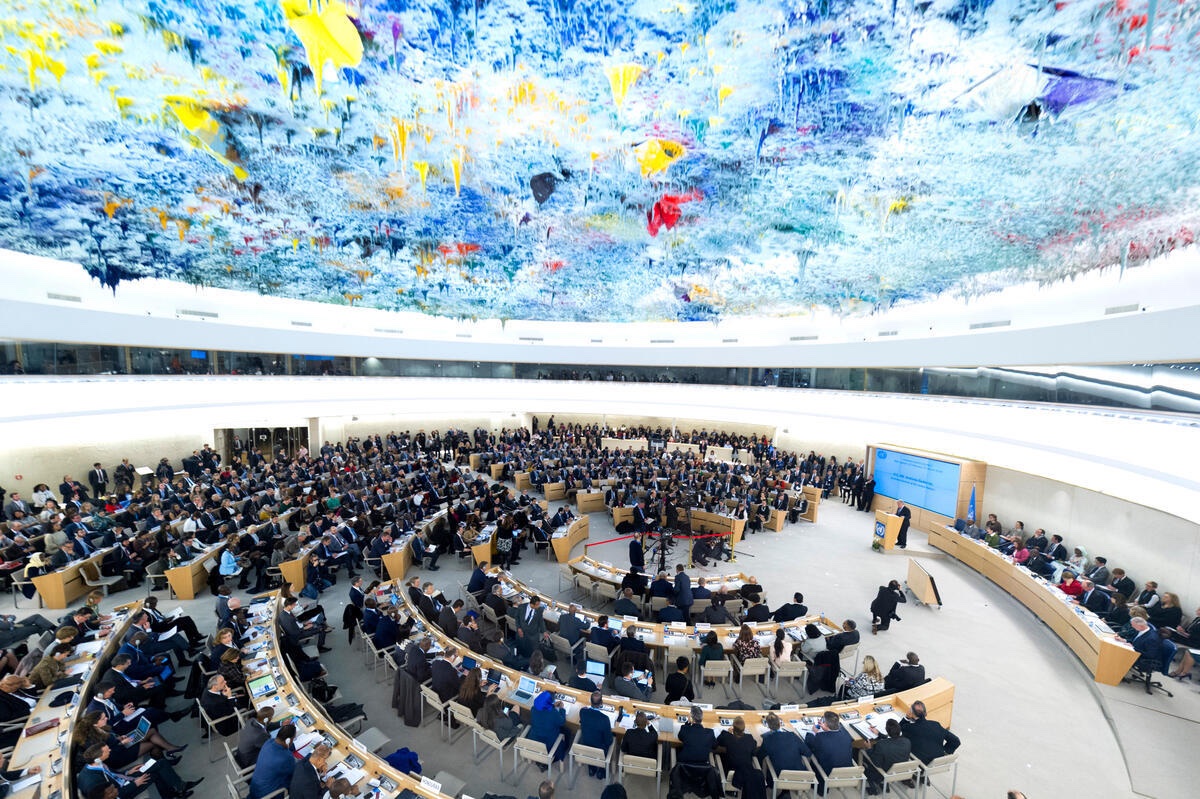
The United States was scheduled to undergo its 4th Universal Periodic Review (UPR) before the UN Human Rights Council last Friday afternoon, November 7, but failed to show. The United States had announced back in August that it would boycott the UPR, so its absence was not surprising. This refusal to engage in the UPR process is nevertheless historic. The Human Rights Council adopted a decision on Friday urging the United States to resume cooperation with the UPR process, with a view to rescheduling the review to November 2026, to the 53rd session of the UPR Working Group, “while leaving open the possibility for it to be scheduled sooner.” Should the United States continue to boycott the UPR, this will mark the first time in UPR history that a UN member state completely opts out of its own review. See U.S. Failure to Participate in Scheduled Human Rights Review Betray’s Nation’s Values, The Advocates for Human Rights (Nov. 7, 2025).
When the UN Human Rights Council was created to replace the UN’s former Commission on Human Rights in 2006, one of the Council’s principal activities was to be the UPR process. G.A. Res. 60/251, para. 5(e) (Apr. 3, 2006). The UPR is a peer review mechanism where all 193 UN Member States take turns being evaluated by fellow countries on their human rights performance. This mechanism was intended to create a forum for interactive dialogue and positive peer pressure, where the country being reviewed could receive questions and recommendations from its peers that would encourage it to improve its human rights policies and practices. See Michael Lane & Alice Storey, Opting Out of Accountability: The United States and the Implications of Withdrawal from the Universal Periodic Review, EJIL:Talk! (Nov. 3, 2025).
The UPR was also intended to complement the role of the UN’s human rights treaty bodies by having a more universal reach. While each treaty body was limited to only reviewing States’ performance as it related to the particular treaty it was tasked with monitoring implementation of, the UPR was to be much more comprehensive, reviewing the entire “universe” of human rights recognized in other treaties, in the Universal Declaration on Human Rights (UDHR), in customary international law, and even in international humanitarian law. See Damian Etone, The Human Rights Council: The Impact of the Universal Periodic Review in Africa 8 (1st ed. 2020). Relatedly, while treaty bodies were limited to only reviewing compliance of States that had ratified the treaty they were monitoring, the UPR would be universal in the sense that it would reach all UN Member States. See Id.
For the most part, State engagement in the UPR has been high. Now that the UPR is in its fourth review cycle, all 193 UN Member States have participated in a review of their own human rights records at least three times since reviews began in 2008, and until the United States’ August 2025 decision to refrain from submitting a national report, no State had yet failed to submit a written national report ahead of its own review. See U.S. Failure to Participate, supra. The level of participation in the UPR process has also grown. According to a 2024 study, the number of recommendations that States received from their peers almost tripled between the first and the third review cycles. See UN Human Rights Council, UPR Facts & Figures 2024. And on average, States have accepted 74% of the recommendations they’ve received pursuant to being reviewed. See Id.
Civil society organizations have shown increasing interest in using the UPR as an advocacy tool as well. For instance, between 2012 and 2022, the number of submissions from civil society organizations to the UPR rose by 58%. See Id. Civil society organizations have used the UPR to highlight human rights concerns that they hoped other countries could push their own countries to address. See UNICEF, UPR Engagement Toolkit. They have also taken concrete recommendations that their country has accepted at the end of a UPR review process as leverage to advocate for action at different levels of domestic government back home. Especially for citizens of countries that cannot access the UN treaty bodies due to lack of ratification of human rights treaties, the UPR process provides an international forum where their concerns can become part of the review record.1
When the United States announced that it would not participate in its 2025 UPR review, a U.S. State Department official explained that “Engagement in UPRs implies endorsement of the (Human Rights) Council’s mandate and activities and ignores its persistent failure to condemn the most egregious human rights violators.” See Andrew R.C. Marshall & Olivia Le Poidevin, U.S. Withdraws from Key UN Human Rights Report, Draws Criticism from Rights Advocates, Reuters (Aug. 29, 2025). Similar criticisms of the Human Rights Council’s ineffectiveness have been raised at various times throughout the years, coupled with suggestions that Western and democratic States should walk away from the Council and its mechanisms, and focus their diplomatic efforts elsewhere. See Kofi Annan, Despite Flaws, UN Human Rights Council Can Bring Progress, Christian Science Monitor (Dec. 8, 2011). Kofi Annan, former Secretary-General of the UN, responded in 2011 to such critics of the UN Human Rights Council by highlighting that “[h]uman rights are universal and must be universally upheld.” Id. He argued that, “to be effective,” it is essential that the Human Rights Council and its mechanisms (including the UPR) continue to “be accountable to all countries—not only a few[.]” Id. Annan further believed that these mechanisms must remain broadly representative of UN membership, underlining the importance of countries with “disparate worldviews” continuing to engage in the long and difficult work of forging common priorities. Id. He warned that the Human Rights Council would fail if countries who felt they didn’t need to participate in mechanisms like the UPR alongside much more “egregious human rights violators” were to “weaken their commitment and engagement with it.” Id. The consequence, according to Annan, would be to “leave the field free to tyrants to call the shots.” Id. An even more troubling result would be the “betrayal of those who are, or might one day be, the target of oppression and violence.” Id.
There has only been one prior instance of a country trying to boycott the UPR completely. In 2013, Israel initially refused to participate in its review, but acquiesced to undergoing review nine months later. See Damian Etone, supra, at 29. It remains to be seen whether the United States can similarly be convinced to reengage with the UPR process.
1 Even though the U.S. government did not appear for its UPR on November 7, civil society organizations still held side events at the UN to spotlight human rights concerns in the U.S. Some examples include (a.) a side event on November 5 organized by the Center for Global Law and Justice (CGLJ) at Northeastern University School of Law, the International Association of Official Human Rights Agencies, the UN Office of the High Commissioner for Human Rights (OHCHR) and the Geneva Academy of International Humanitarian Law and Human Rights; (b.) a side event on November 6 organized by the Abolitionist Law Center, the American Civil Liberties Union (ACLU), the International Service for Human Rights, the National Homelessness Law Center, the Center for Constitutional Rights, and the Center for Reproductive Rights; and (c.) a side event on November 7 organized by the American Civil Liberties Union, the Center for Constitutional Rights, and Human Rights First.